
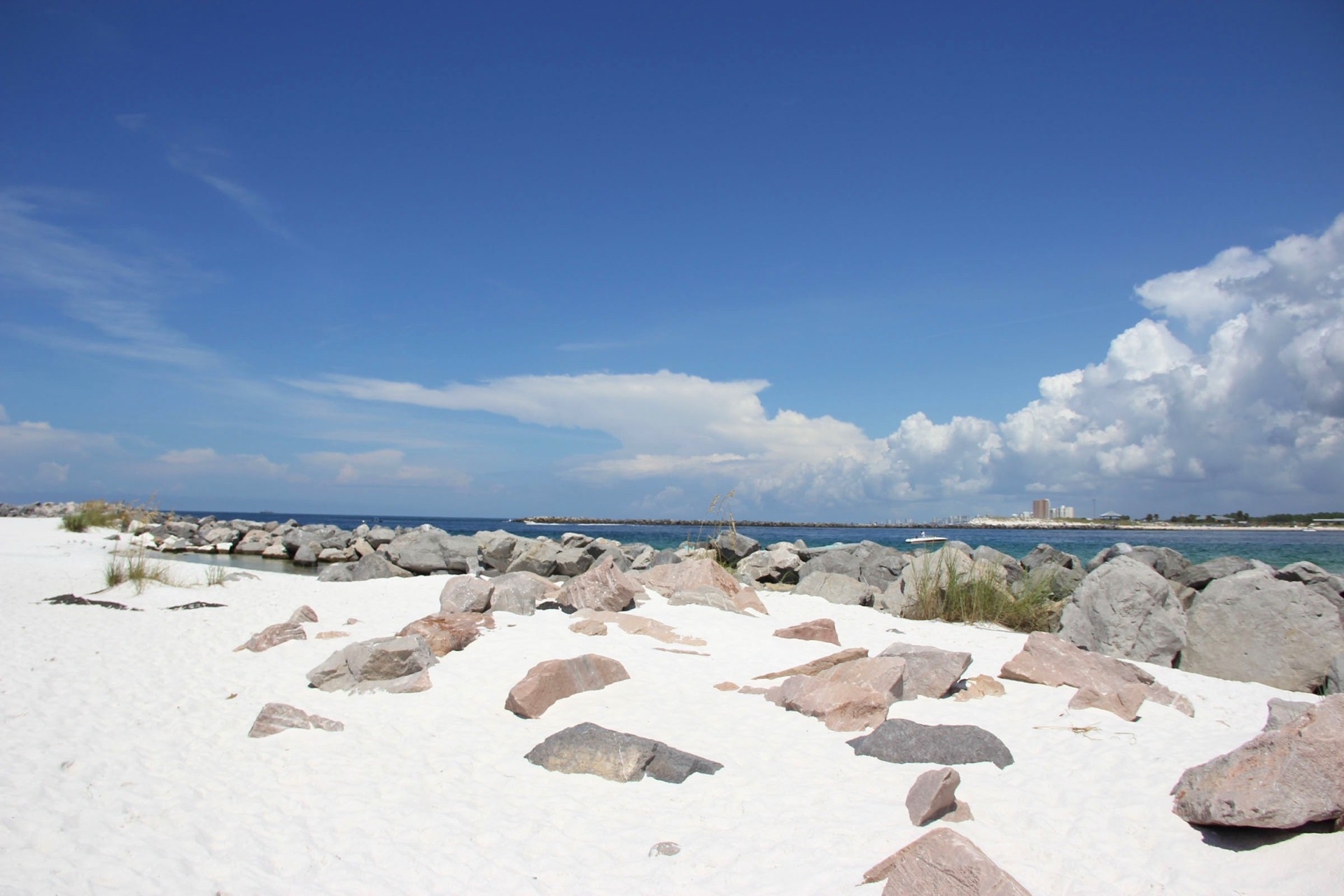
Weather & Water Conditions
Shell Island is a weather-dependent experience. We operate March through November, and conditions can change quickly on the water. Here's what to expect each month and how we make safety decisions.
Safety Is Our #1 Priority
We cancel trips when conditions are unsafe — high winds, lightning, rough seas, or small craft advisories. If we cancel due to weather, you'll receive a full refund or can reschedule. Call us at 850-235-4004 on the morning of your trip if weather looks questionable.
High Winds
We typically close when sustained winds exceed 15-20 mph or when small craft advisories are issued.
Thunderstorms
Lightning within 10 miles means we stop operations until the storm passes. Summer storms usually clear within an hour.
Rough Seas
Wave heights over 3-4 feet in the pass make the crossing uncomfortable and potentially unsafe.
Month-by-Month Guide
| Month | Air Temp | Water Temp | Crowds | Notes |
|---|---|---|---|---|
| March | 68-75°F | 65-70°F | Low | Season opening. Water can be chilly but air is pleasant. |
| April | 72-80°F | 70-75°F | Moderate | Great month to visit. Comfortable water temps, fewer crowds than summer. |
| May | 78-86°F | 75-80°F | Moderate | Water warms up nicely. Sea turtle nesting begins. |
| June | 82-90°F | 80-84°F | High | Peak summer begins. Afternoon storms are brief but intense. |
| July | 84-92°F | 83-86°F | High | Hottest month. Mornings are best — storms typically hit 2-4pm. |
| August | 84-91°F | 84-87°F | High | Warmest water. Jellyfish more common. Watch tropical weather. |
| September | 80-88°F | 82-85°F | Low | Crowds thin out. Still warm. Best value month. |
| October | 72-82°F | 75-80°F | Low | Excellent month. Cool mornings, warm afternoons, calm water. |
| November | 62-74°F | 68-73°F | Very Low | Season winding down. Some cold fronts. Water still swimmable. |
Best Time to Visit Shell Island
Best Overall: April, May, October
Warm but not scorching. Water is comfortable. Crowds are manageable. Storms are less frequent. These months offer the best balance of weather, water temperature, and crowd levels.
Best for Warm Water: June – August
Water temperatures in the low-to-mid 80s. Perfect for swimming and snorkeling all day. Trade-off: higher crowds, afternoon thunderstorms, and more intense sun.
Best for Avoiding Crowds: September, March, November
Shoulder season means fewer boats, more beach space, and often better pricing. Water may be cooler, but the experience is more peaceful and private.
Best Time of Day: Morning (8am-11am)
Calmest water, clearest visibility for snorkeling, best wildlife viewing, and cooler temperatures. Summer afternoon storms typically build between 2-4pm, so morning trips give you the most reliable weather window.
Check Before You Go
On the morning of your trip, check these resources or call us at 850-235-4004 for a live conditions report:
- NOAA Marine Forecast — for wind speed, wave height, and small craft advisories
- Weather.gov radar — for real-time storm tracking
- Call us directly — we're on the water every day and know conditions firsthand